If you’re buying a South Florida condo or HOA home, the estoppel certificate is one of the most important pre-closing documents in the file. It is the association’s official statement of what the unit or parcel owes, and what financial exposure a buyer may walk into after funding.
Treating it as a last-minute checkbox is how deals stall, credits get renegotiated late, or surprises show up after closing.
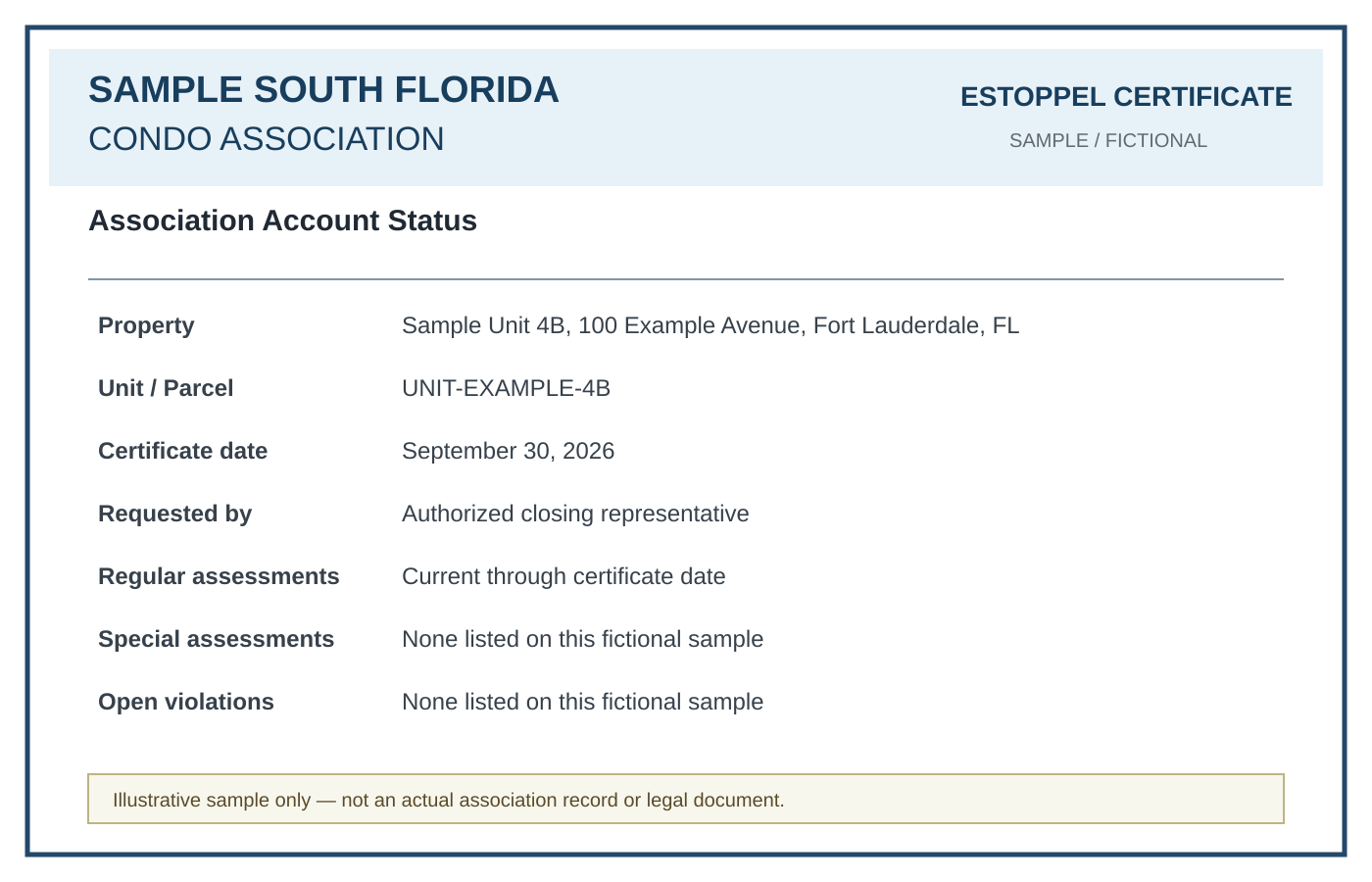
What an estoppel actually is
An estoppel certificate is the association’s binding snapshot of amounts owed for that unit or lot as of the certificate date. Once issued, the association is generally limited in how it can later claim a different balance for the period covered by that certificate.
For closings, that means:
- Regular assessments and current balances matter
- Special assessments and other amounts owed matter
- Amounts scheduled to become due during the certificate’s effective period matter
- Open association violations noticed to the current owner can matter on condo estoppels
Paid monthly dues alone do not mean the file is clean.
The timing agents often underestimate
Under Florida law, condominium and HOA associations generally have 10 business days after a proper written or electronic request to issue the estoppel.
That clock is not a courtesy window. Build it into the closing calendar early, especially when:
- Financing or underwriting may slip
- The property sits in both a condo association and a master/neighborhood HOA
- The seller’s ledger and the first estoppel don’t match
Once issued, an estoppel is typically valid for 30 days if delivered electronically or by hand, or 35 days if mailed. If the closing pushes past that window, a new certificate is usually needed and the request clock starts over.
Rush options may exist for a shorter turnaround, often with an additional statutory fee. Fees are generally set by statute and can be higher when the account is delinquent. None of that is usually negotiable after the fact.
One property, more than one estoppel
Many South Florida properties are subject to more than one governing body. A condo unit may also sit under a master association. Each association may need its own estoppel, on its own timeline, with its own fee.
If your contract calendar only budgets for one certificate, you are already behind.
What to compare before you rely on it
A strong pre-closing review does more than confirm “dues current.” Ask the title and closing team to help line up:
- The estoppel certificate itself
- The current association ledger
- Seller disclosures and assessment notices
- Contract language on who pays regular dues, special assessments, and estoppel fees
- Any pending special assessments or reserve catch-up work already approved
- Open association violations (separate from the money balance)
- Municipal lien / open-permit / code issues, which an association estoppel does not replace
This fits the same diligence pattern as reviewing condo special assessments and Florida condo SIRS before funding.
Why title and closing care
Unpaid assessments can follow a buyer after transfer under Florida condo and HOA rules in ways that surprise people who assumed “seller pays everything at closing.” The estoppel is how the closing table tries to pin down the association’s position before funds disburse.
It will not replace:
- A full title search and title insurance review
- Municipal lien and permit diligence
- Lender condo/HOA questionnaire and warrantability analysis
Those are parallel tracks, not substitutes.
Practical checklist for Fort Lauderdale and South Florida deals
- Order estoppels early, not the week of closing
- Confirm every association that must issue one
- Calendar the 10-business-day issue window and the 30/35-day validity window
- Compare estoppel vs ledger vs seller disclosures in writing
- Reconcile who pays fees and assessments in the contract and on the settlement statement
- Re-order if the closing date slips past validity
FAQ
How long does a Florida condo or HOA have to issue an estoppel?
Generally 10 business days after a proper written or electronic request from an eligible requester.
How long is the certificate good for?
Typically 30 days if delivered electronically or by hand, or 35 days if mailed.
Does one estoppel cover everything?
Not if the property is under more than one association. Each governing entity may need its own certificate.
Does an estoppel replace a municipal lien search?
No. Association balances and city/county compliance are different diligence tracks.
Closing with a Fort Lauderdale title company
Independent Title of Fort Lauderdale (dba Florida’s Best Title Company) helps South Florida buyers, sellers, and agents keep association estoppels, assessments, and closing timelines aligned so funding day is not the first time the numbers get real.
Questions on a condo or HOA file in Broward or nearby? Call (954) 493-8288 or visit indytitleftl.com.
Disclaimer
This article is for general informational purposes only and is not legal advice, a title opinion, or a substitute for advice from a licensed Florida attorney or title professional. Association rules, statutes, fees, and forms change. Readers should verify current Florida law and their specific contract and closing file with qualified counsel.